2001
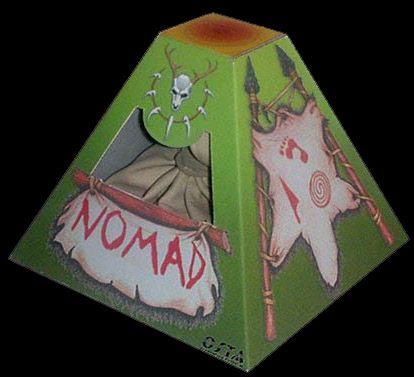
Nomad
2–5 players · 120 min · 10+
(From The Rule Book Introduction) This is the lay of the land.
This is the nature of the people who reside upon it.
In the mountains live the people called the Neemahk. Who wear the thick woolly skins of the tiger and mammoth, and carry spears tipped with sharp, shiny, black rock. They are fierce warriors. But even better hunters.
A day's journey downriver, at the edge of the forest there, live the men who call themselves the Treg. They have learned to reap the bounties of the water. They harvest the river with nets woven of soft, pliable reeds and roots; and make stories out of symbols painted on hides.
On the broad open plains to the south live the Marmar. Who plant seeds, and raise animals for work and food. They are a peaceful people, desiring only to be left alone. And the strong walls they have built around their village do much to help them maintain their solitude.
Lastly are the Dermen, who are a tribe of raiders. They know the land well, being so traveled -- getting direction from the patterns in the stars. They go wherever the warmth of the sun and the wealth of nature lead them. And if they cannot find food enough for themselves, they simply take it... from others.
Welcome to the World of Nomad...
Nomad is a game based on the life and times of the early tribal societies at the dawning of the Neolithic Age. It is the story of their growth and expansion, their struggles against the elements of a harsh and unforgiving, prehistoric world, full of rivals and predators; every day, a walk through the borderlands between perseverance and extinction.
As the chieftain of one of these early tribes, it will be your job to make the decisions that lead your people to prosperity. Will you lead them into the new era, or will you simply become history?
Rules and strategy
Source knowledge for this edition still needs preparation or review.
Prepare rules knowledge
Source rules are needed before we can answer reliably.
Sign in to submit a rulebookAsk about Nomad
Answers show their sources. When the evidence is missing or unclear, we’ll say so.