1991
The Lincoln Challenge
2–6 players · 0 min
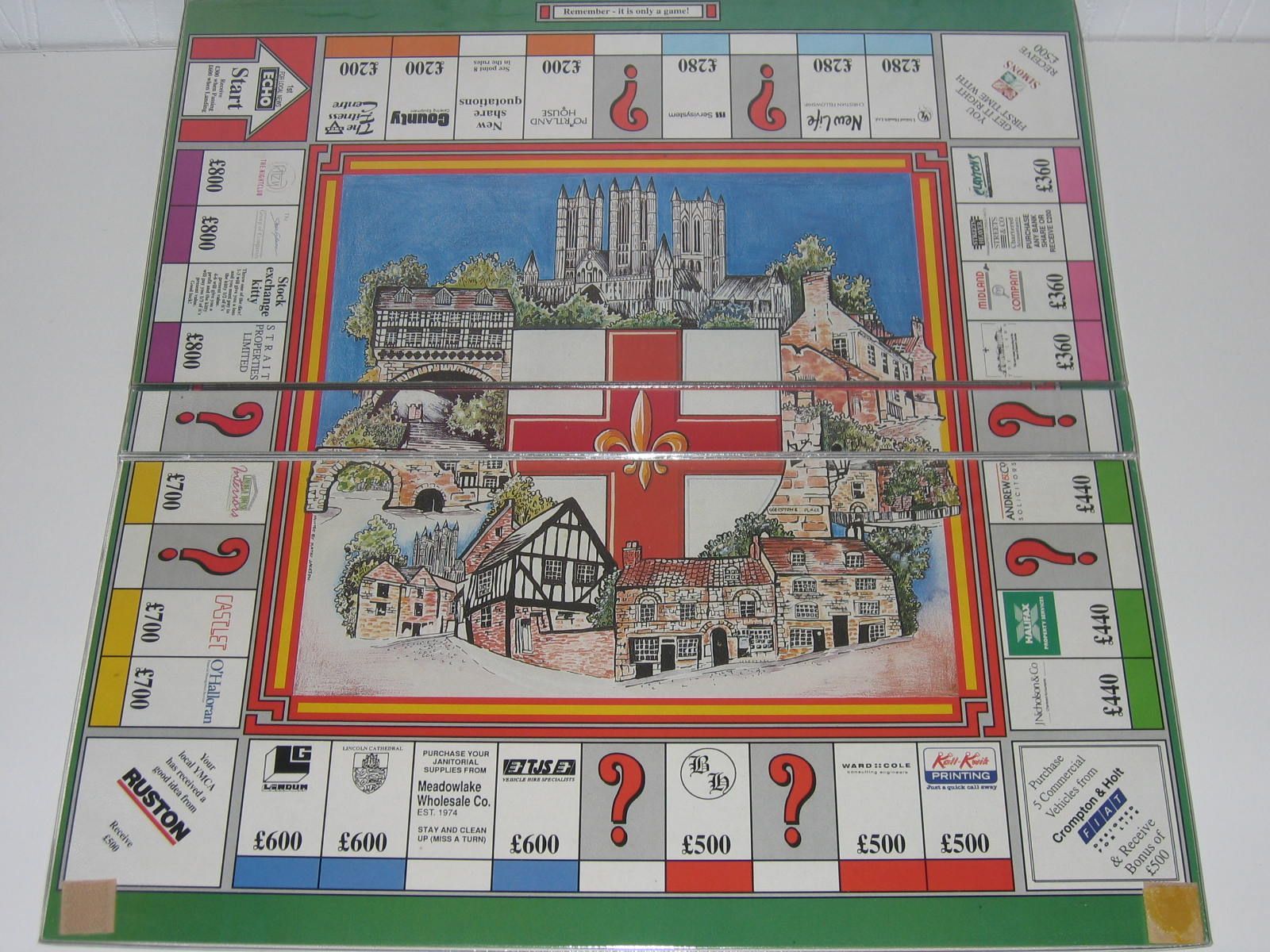
THE LINCOLN CHALLENGE is a monopoly style stock-market board game developed by the LINCOLN (UK) YMCA to generate funds for its activities. Lincoln is situated in the East of England and 120 miles above London
Players progress around the board as a result of the roll of 2D6. When landing on a Company square a player may purchase a share in that company (there are two shares available in each company), if he wishes. If not he may put the share up for auction, with any excess over the sale price being retained by that player as his fee for being the auctioneer.
Players landing on companies that are already owned must pay to visit, with the payment due being based on how many shares are owned in that particular company and in the other two companies in the same colour series. Since shares can be owned by two different players both may demand payment from a visitor.
Certain squares on the board require the drawing of a Chance card which normally result in income being received from or paid to the bank.
The “New Share Quotations” square results in the changing of share prices for some of the blocks of companies. This will result in players losing or gaining money on the shares that they own. It also requires players to put up one of their shares for auction thereby permitting players to trade in shares.
The game can be ended in three ways, which should be decided before the game starts:
After a set time When the first player becomes bankrupt When all but one player has gone bankrupt
At the end of the game the money is counted and shares are valued at whatever is the then current rate. The player with the greatest assets is declared the winner.
Rules and strategy
Source knowledge for this edition still needs preparation or review.
Prepare rules knowledge
Source rules are needed before we can answer reliably.
Sign in to submit a rulebookAsk about The Lincoln Challenge
Answers show their sources. When the evidence is missing or unclear, we’ll say so.
Find a copy
Some links may earn GamesBond a commission. Prices and availability are set by the retailer.